Organization Tips · 4 min read
How to choose storage zones by frequency of use
Choose storage zones by how often belongings are used, where the activity happens, and who needs access. Reserve comfortable, reachable places for frequent use; put occasional items farther away only when retrieval remains practical. Record remote locations so moving something out of daily reach does not also move it out of memory.
This guide helps when frequently used items are left on counters because putting them away is inconvenient. You will test the route to one belonging before rearranging an entire room.
What counts as a prime storage zone?
A prime zone is a place the intended user can access comfortably for a frequent task. Its height and position depend on the person, the object, and the activity.
A shelf that works for a standing adult may not work for a seated user or a child. A heavy object may need a different location than a light object used equally often. Use a practical reach-and-return test rather than one universal waist-to-shoulder rule.
Remote storage means less convenient access, not a particular room. A top closet shelf, another cupboard, or a suitable storage area can all be remote relative to the task.
How do I map storage around a daily activity?
Start with the activity and test the whole retrieval-and-return route. Make one change that reduces actual effort.
- Choose one task. Consider making coffee, packing a school bag, or using a craft tool.
- Observe the current route. Notice walking, bending, lifting, lids, and objects that must move first.
- Identify frequent belongings. Give the items used for the task priority in a comfortable nearby place.
- Move occasional items thoughtfully. Check care needs, weight, and access before assigning a less convenient spot.
- Test with the actual user. Retrieve and return the objects as part of the real task, not an empty-container demonstration.
- Record moved belongings. Save their current places and revisit the arrangement after ordinary use.
How would zoning change a coffee cupboard?
In this worked example, daily mugs are difficult to reach because occasional serving platters occupy the easiest shelf. Swapping their zones reduces the barrier to returning a mug.
The household moves platters to a suitable nearby cupboard and records that destination. The reachable shelf now holds the mugs used by its regular users, without stacking them behind seldom-used pieces. Filters and other supplies sit near the coffee-making task where appropriate.
The arrangement is tested by everyone who uses it. If a person cannot comfortably reach the shelf, a drawer or another location may be better. The goal is useful access, not a display that looks consistent from outside.
Should I group by activity or by item type?
Group by activity when it removes repeated trips, and by item type when comparison or shared access matters more. You can combine both without reorganizing every category.
A small sewing kit may keep scissors, thread, and needles together even though each belongs to a different category. Reserve supplies can remain elsewhere with a recorded place. For visibility and sorting detail, compare visible and hidden storage choices.
Seasonal changes can alter frequency. Use a seasonal rotation to move occasional belongings thoughtfully rather than leaving prime space reserved for a past activity.
What if items still collect beside their storage?
Check whether returning the item is harder than leaving it nearby. Often one barrier, such as a lid or a crowded drawer, matters more than a new label.
- Storage far from use: test a closer place before adding instructions.
- A full drawer: remove an unnecessary layer or change the container so objects can return independently.
- An inaccessible height: choose a zone for the actual user, including mobility and reach needs.
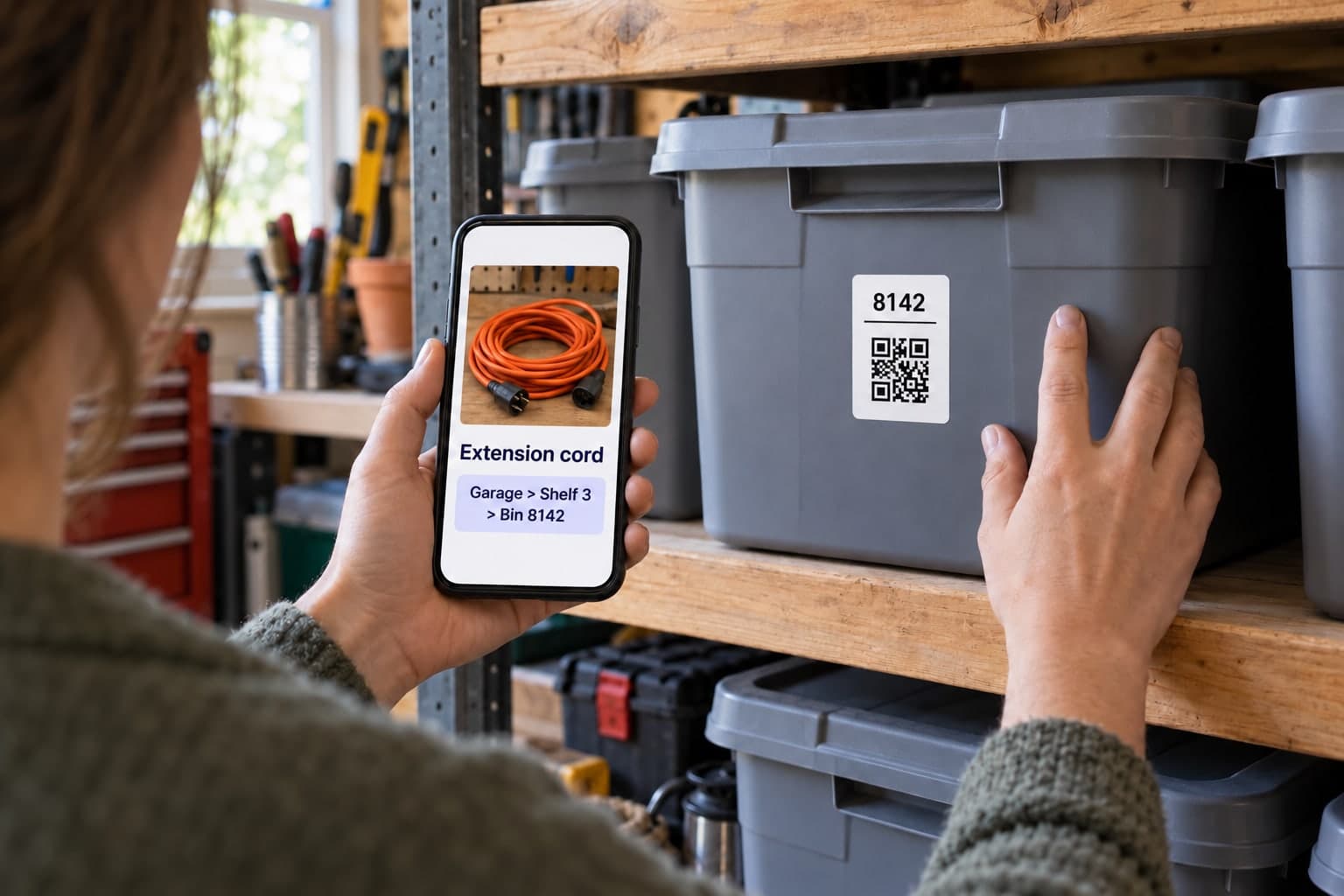
- A remote place forgotten: save a useful photo, item name, and physical location.
Binly can remember the remote place while your physical setup changes. It does not track real-world movement; update the record after moving an item.
What are the most common questions?
These answers cover the practical choices you can make before expanding your setup.
Must daily items be at eye level?
No. Comfortable reach depends on the user and task. Test access with the person who actually needs the item.
Can a heavy item go on an upper shelf if rarely used?
Infrequent use alone does not make that a suitable location. Consider weight, safe handling, shelf ratings, and access before choosing a place.
How often should I review zones?
Review when an item is repeatedly left out or an activity changes. A small correction then may be more useful than a scheduled whole-home rearrangement.
Do I need matching labels?
No. Recognizable names or photos can be enough. Optional Binly labels identify places and open their saved records.
What if the whole household uses the same item?
Choose a shared location with the users rather than optimizing for one person alone. If different needs conflict, a useful duplicate may be more practical than constant transfers.
For current plans and limits, see Binly pricing.
What should I do next?
Retrieve and return one frequently used belonging. Remove one obstacle in that route, then record any occasional item you move to make room.
Start with one placeKeep reading: How to rotate seasonal belongings without losing track of them.