Organization Tips · 4 min read
How to rotate seasonal belongings without losing track of them
Rotate seasonal belongings by reviewing one group after use, preparing it according to its care instructions, and choosing a suitable off-season place. Photograph recognizable contents, identify each container, and record its current location. Bring items back when your climate and activities call for them, rather than following a universal twice-yearly calendar.
This guide helps with holiday decorations, outdoor gear, and clothing that changes with the season. You will create a return path that still works if containers hold mixed items or the weather changes early.
What makes a seasonal storage system useful?
A useful system preserves access to the belongings you will need next and records the ones moving out of daily reach. It does not require identical containers or a complete seasonal clearout.
Choose storage by the contents’ care needs and how you can retrieve them. Remote space can suit infrequent belongings, but a deep stack is a poor place for something you may need unexpectedly.
For family photographs and paper keepsakes, the Library of Congress storage guidance is more relevant than a general “put it in the attic” rule. A sealed tote does not make every environment suitable.
How do I pack and record an off-season group?
Finish one group through preparation, packing, and location recording before starting another. Keep near-term essentials accessible while weather or activities remain uncertain.
- Review after use. Note what worked, what needs repair, and what you want to keep. An unused season alone does not decide whether an item should leave.
- Prepare appropriately. Follow the garment or equipment instructions for cleaning, drying, batteries, and storage.
- Choose a manageable container. Check weight when loaded, shelf dimensions, and whether the container suits the contents.
- Photograph before closing. Capture useful views; create named item records for individual belongings you want to search.
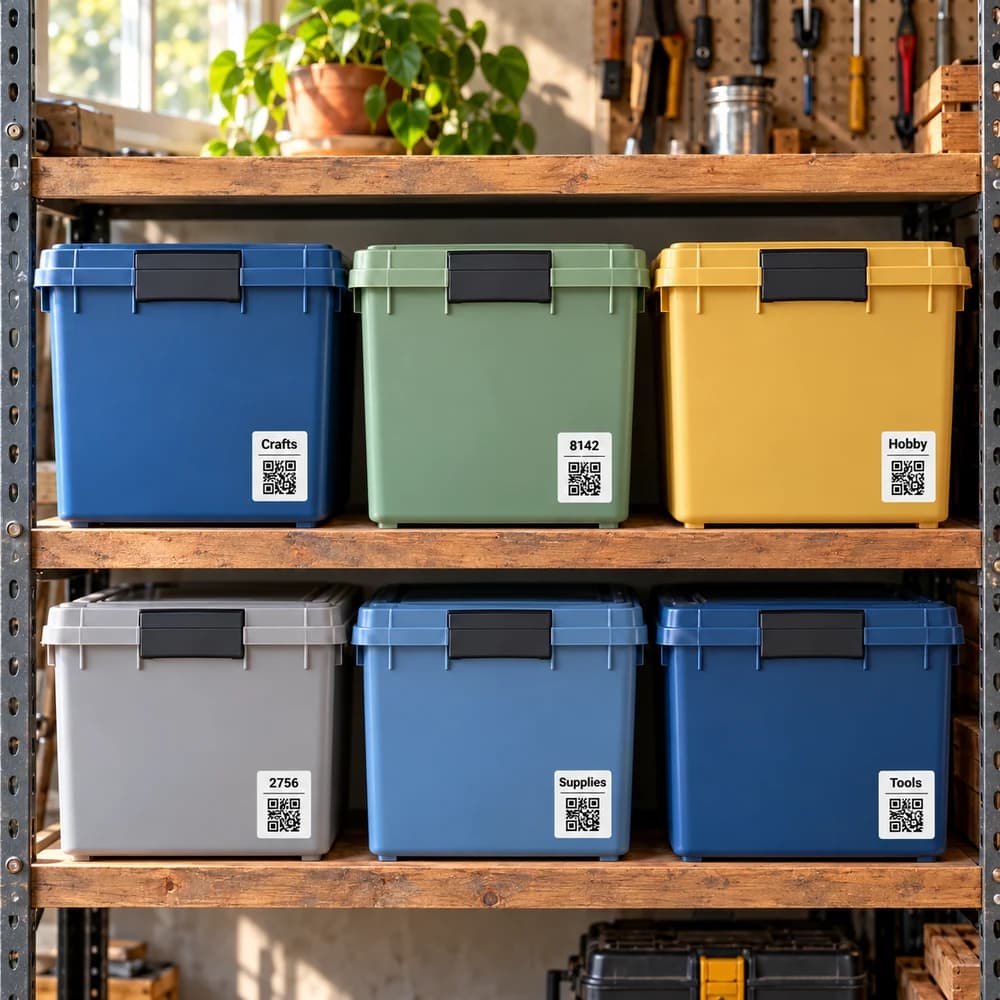
- Identify the place. Use a stable identifier such as Garage Shelf 2, Box 16. A removable contents note can add context without defining the box forever.
- Record the move. Update the current place and choose a review trigger that fits your household’s season.
How would I store decorations for the next holiday?
In this worked example, two containers hold lights and table decorations, while a delicate family ornament stays in more suitable indoor storage. One category can have several recorded locations.
The household checks the lights, records a repair task separately, and photographs the kept contents before closing Box 16. That box returns to Garage Shelf 2. The family ornament is recorded under Hall Closet Upper Shelf instead of being forced into the same environment.
Next season, searching the saved item names leads to both locations. The label identifies each place; it does not detect whether a decoration has been moved or removed.
How do I decide what stays within easy reach?
Base access on expected use and the needs of the person retrieving the item. Keep transition-season belongings reachable until you are comfortable putting them farther away.
A light jacket, rain gear, or travel kit may remain useful outside its usual season. Use storage zones by frequency rather than treating every seasonal item as remote storage.
For a clothing-specific rotation, see closet and capsule wardrobe planning. For the physical storage area, see garage, attic, and basement storage.
Why are seasonal items difficult to find again?
The usual gaps are unclear container identity, old locations, hidden contents, and timing that no longer matches real use. Correct the missing memory rather than repacking the entire system.
- Several identical unlabeled totes: give each a distinct identifier visible from its retrieval side.
- A photo of only the closed lid: add a view of the contents.
- A moved box: update its place hierarchy and any individually moved item records.
- A fixed calendar that does not fit: use a trip, weather change, or end-of-use event as the review trigger.
Binly supports saved photos and current places. The storage environment and timing remain your choices, and ordinary calendar reminders can handle seasonal planning.
What are the most common questions?
These answers cover the practical choices you can make before expanding your setup.
Do seasonal containers have to be clear?
No. Choose materials and protection appropriate for the contents. An opaque container can still be findable through a stable identifier and useful saved photos.
Should I rotate everything on April 1 and October 1?
Only if those dates fit your climate and activities. A household-specific trigger is more useful than a universal calendar.
Can I keep unrelated seasonal items together?
Yes, if their care needs are compatible and the grouping helps. Record the contents so a shared box does not depend on a narrow category label.
Does a QR label update the contents automatically?
No. It opens the saved place record. Refresh photos and item locations when physical contents change.
Should I donate everything I did not use this season?
Not automatically. Consider unusual weather, interrupted plans, practical backup needs, and personal value before deciding.
For current plans and limits, see Binly pricing.
What should I do next?
Choose one off-season group and finish its preparation, photo, and current-place record. Leave transition essentials accessible and choose a return trigger that fits your actual year.
Start with one placeKeep reading: How to make garage, attic, and basement storage easier to use.