Organization Tips · 4 min read
How to use the container concept to set storage limits
The container concept uses the space you already have as a boundary for a group of belongings. Choose a shelf, drawer, or box, put your most useful items there first, and stop before access becomes difficult. Decide what to move or release when the space fills, rather than automatically buying more storage.
This guide helps when a cabinet keeps overflowing or another storage purchase feels inevitable. You will test a boundary in one small space without making a rule for your entire home.
What is the container concept?
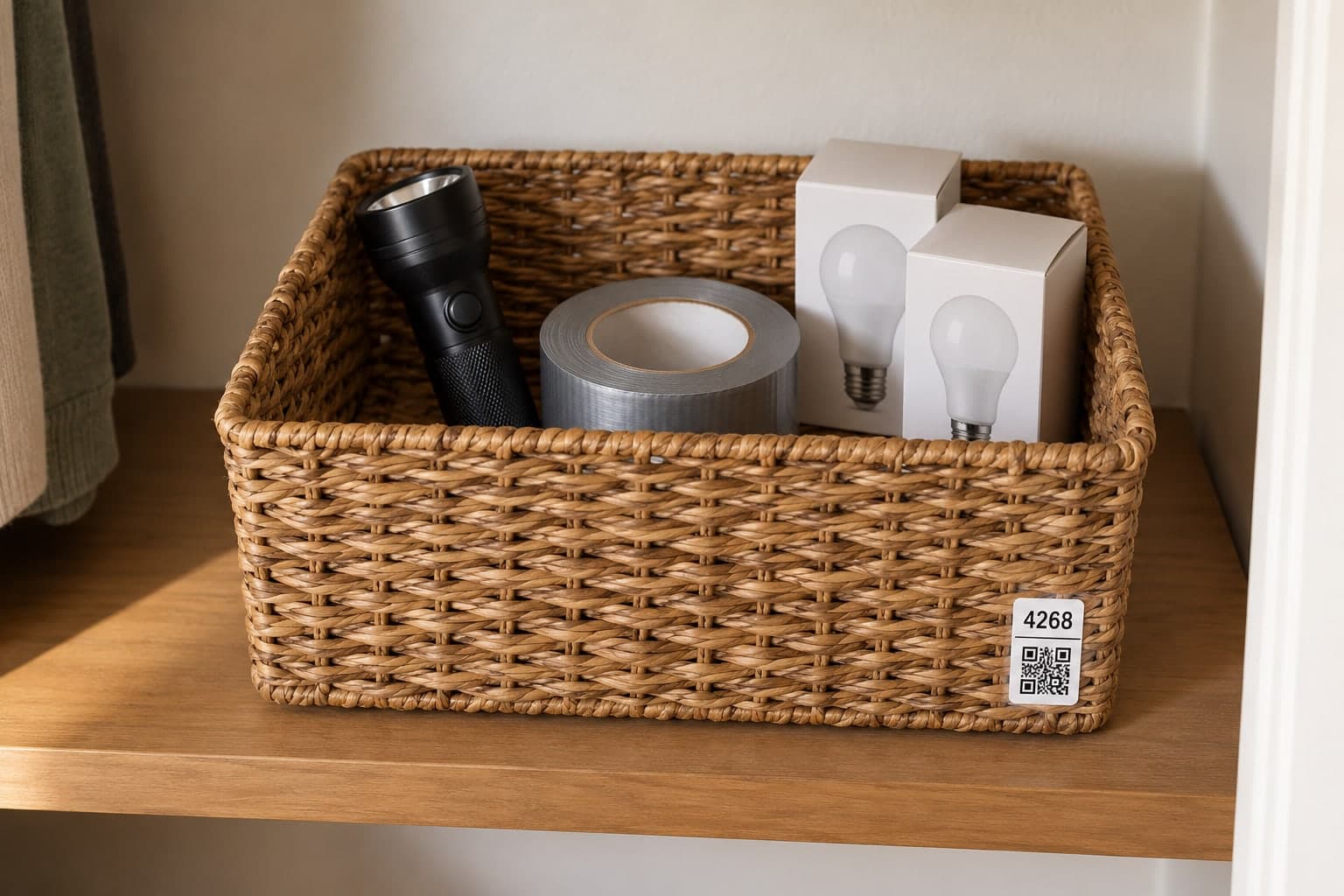
A container is a physical limit you choose for belongings, from one basket to a whole closet. The useful test is whether you can retrieve and return things comfortably.
Dana K. White describes fitting belongings to available space in her decluttering process. Our walkthrough applies that idea to one everyday storage decision; it is an optional approach, not a measure of how much anyone should own.
A boundary can help you compare actual uses. A spare mug may be worth keeping, but keeping it on the daily mug shelf might mean moving something you reach for every morning.
How do I choose and use a storage boundary?
Start with a space you can finish in one sitting and judge capacity by access, not by how tightly you can pack it. Use an existing container before buying a replacement.
- Choose one job. For example, let one shelf hold the board games you want available for game night.
- Check the physical space. Make sure doors close, shelves remain stable, and belongings can be lifted without disturbing the whole stack.
- Put useful favorites first. Include practical essentials even when they are not favorites. Leave awkward gaps if they make retrieval easier.
- Test a return. Take one item out and put it back. If the lid needs force or three other boxes must move, reduce the contents or reconsider the container.
- Decide about the remainder. Keep it elsewhere with a recorded location, offer it to someone who wants it, or choose an appropriate exit. A full shelf does not make an item worthless.
What would this look like on a board-game shelf?
In this worked example, a household chooses one reachable shelf for its regularly played games. The boundary makes the tradeoff visible before a new game arrives.
Four games fit side by side and can be removed independently. A fifth fits only on top, where it blocks access. The household moves a rarely played keepsake game to a documented closet box and leaves the four active games accessible.
If all five games are regularly used, a different shelf may be a better decision. The method should reveal a space mismatch rather than force a donation. Revisit the boundary when a household grows, accessibility needs change, or a hobby becomes more important.
What if the container keeps overflowing?
Overflow usually means the boundary, the return process, or incoming volume needs another look. Change the part that causes the problem instead of squeezing harder.
- Too many layers: reduce stacking so the item at the bottom remains reachable.
- An unrealistic limit: allow enough space for essential supplies and other household members’ belongings.
- Expansion without a decision: before adding a second box, decide what it will hold and where it can safely live.
- Repeated purchases: try a category-specific one-in, one-out rule if you want a simple way to maintain the boundary.
How can I remember items kept outside the main container?
Record the actual destination of overflow you choose to keep. A useful photo and place name let you preserve access without requiring every item of a category to share one shelf.
In Binly, save a place photo for visual reference and create named items when you want individual keyword search. A label identifies the physical place; update the saved photo or item location when contents move. See organizing by location for a small starting example.
What are the most common questions?
These answers cover the practical choices you can make before expanding your setup.
Do I have to get rid of everything that does not fit?
No. You can choose another suitable storage place or change the boundary. The useful decision is whether the space and access are worth it to you.
Can a room count as a container?
Yes, but a shelf or drawer is easier to test first. A room-wide boundary involves more people, activities, and access needs.
Should I buy matching boxes first?
Use what you have until you know what needs storing and how you retrieve it. Matching containers are optional and may waste space if their dimensions do not suit the shelf.
How much empty space should I leave?
Leave enough to remove and return items without force or a complicated rearrangement. There is no single percentage that fits every shape, container, or household.
Can I use this idea in a shared home?
Agree on the boundary with the people who use the space. Make decisions about your own belongings and ask before moving or releasing someone else’s.
For current plans and limits, see Binly pricing.
What should I do next?
Test one shelf by taking an item out and returning it. Adjust the contents or boundary only as much as needed, then record any belongings you move elsewhere.
Start with one placeKeep reading: How to use the one-in, one-out rule at home.