Organization Tips · 4 min read
How to use a ponder box for uncertain belongings
A ponder box temporarily stores nonessential belongings while you test whether you want them in active space. Record the contents, choose a review date, and keep a way to retrieve anything needed. At review, check ownership, condition, and consequences before deciding; an unopened box is evidence of nonuse, not automatic permission to donate everything.
This guide helps when you want a reversible trial instead of an immediate keep-or-release decision. You will keep the trial small enough that it does not become a second forgotten storage system.
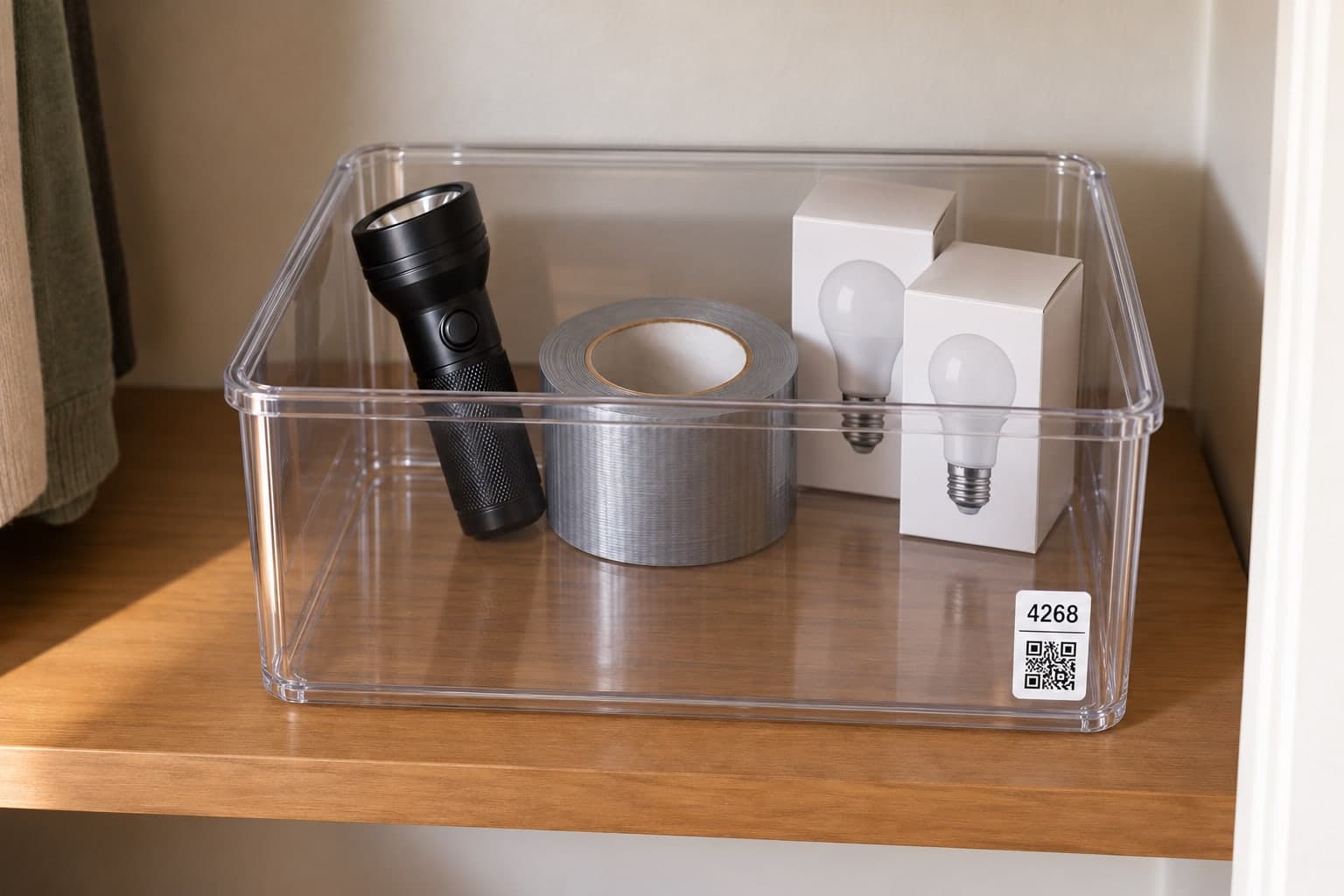
Which belongings are suitable for a ponder box?
Use a ponder box for nonessential, stable belongings you own and can temporarily set aside without losing necessary access. Choose objects whose storage needs fit the trial location.
Spare decorative pieces or duplicate craft tools may suit a trial. Important documents, medicines, essential equipment, perishable goods, borrowed objects, and time-sensitive returns need their own decisions instead.
The trial can reduce immediate pressure, but it is not risk-free. A future need may still arise after release, and some belongings matter for reasons other than frequent use. Keep those limits visible when interpreting the result.
How do I set up a bounded trial?
Give the box an identity, an accessible location, and a review plan before filling it. A clear ending makes temporary storage more useful than an indefinite “maybe” pile.
- Pick one small group. Start with a manageable box rather than several rooms of uncertain belongings.
- Screen the contents. Confirm ownership, care needs, and whether anything is essential or tied to a deadline.
- Record what goes in. Photograph recognizable contents and note items you might need to search individually.
- Name and place the box. Use a distinct identifier and record its actual storage location.
- Choose a review date. Match the trial to likely use; a decorative object and seasonal equipment may need different periods.
- Allow retrieval. Remove anything you need, give it a useful home, and update the contents record.
- Review deliberately. Check the record and, when needed, the contents before choosing keep, transfer, sale, donation, or disposal.
How would a trial work for spare craft tools?
In this worked example, three duplicate punches leave an overfilled craft drawer for a small review box. The active set remains available while the owner tests the extra space.
The box is recorded under Hall Closet → Lower Shelf → Box P1, with photos and a three-month review in the calendar. During that period, one punch is needed for a project and returns to the active drawer. Its record is updated.
At review, the two remaining tools are checked for condition and actual future plans. The owner keeps one specialist shape and offers the other to a willing recipient. The trial informs the decision without imposing a rule that everything unrequested must leave.
What if the review date keeps moving?
A repeated delay is a reason to simplify the review or reconsider whether this method helps. It does not mean you need a bigger box or a harsher deadline.
- Too much in the trial: stop adding items and review one small group.
- No actual date: use the calendar or reminder system you already check.
- Unclear reason to keep: compare present-day choices with an unused-belonging decision exercise.
- Automatic sealed-box donation: check for excluded documents, other owners’ belongings, unsuitable goods, and destination acceptance first.
For a larger sorting session, the ponder destination can fit within a six-box audit. Limit the pending work to what you can actually revisit.
How can I find something during the trial?
Keep the contents record connected to the box’s real location. A trial should reduce active clutter without making a needed object impossible to retrieve.
In Binly, a place photo provides visual reference while named item records support keyword search. Moving an item back into use requires a location update; the app does not detect a box opening or automatically decide its release date.
What are the most common questions?
These answers cover the practical choices you can make before expanding your setup.
How long should a trial last?
Choose enough time to cover the likely use of the belongings. A few weeks may answer one question, while seasonal use needs a longer or differently timed review.
Must I seal the box?
No. Seal it only if that helps and the contents suit it. Keep a way to retrieve an item without treating retrieval as a failed trial.
Should unopened boxes be donated without checking?
Do not use that as an automatic rule. Confirm ownership, contents, condition, important exceptions, and the recipient’s acceptance before release.
Can I put sentimental objects in the trial?
You can choose to, but nonuse may say little about their meaning. A story record or a separate sentimental review may be more useful than a deadline.
What if I need an item again?
Retrieve it and choose a practical place for its actual use. The trial has given you useful information rather than a reason for guilt.
For current plans and limits, see Binly pricing.
What should I do next?
Choose a few suitable nonessential belongings, record their contents and location, and set a review date. Keep the decision reversible until you deliberately choose an exit.
Start with one placeKeep reading: How to recognize the endowment effect when reviewing belongings.